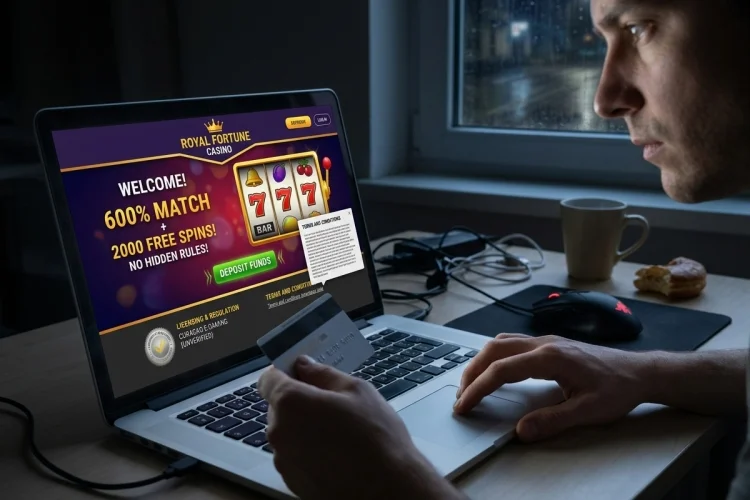
A polished homepage does not automatically make an online casino reliable. Modern website templates, professional-looking games, and generous welcome offers are easy to copy.
The details hidden behind the design usually reveal whether an operator deserves your trust. An Untrustworthy Casino Website may display a fake licence logo, vague ownership information, unrealistic promotions, or withdrawal rules that are difficult to find.
Some platforms even offer games from recognised software providers without being legally authorised to accept players in a particular market.
Before sharing personal documents or depositing money, take a few minutes to verify the operator independently rather than trusting claims printed on its own pages.
The Licence Cannot Be Independently Verified
A legitimate casino should identify the company operating the website, the relevant regulator, and its licence or account details. Do not assume that a regulator’s logo proves anything by itself.
Search the official regulator’s public register and confirm that the company name, domain, and licence status match. The UK Gambling Commission and Malta Gaming Authority both provide public tools for checking licensed businesses or approved URLs.
Fake casinos may copy licence numbers from unrelated businesses. Others place a static regulatory seal in the footer that does not lead to a working verification page.
The Domain Does Not Match the Licensed Operator
Check the exact spelling of the website address. Fraudulent platforms may add extra letters, hyphens, unusual subdomains, or different domain extensions to imitate established brands.
The Malta Gaming Authority maintains information about unauthorised URLs and has issued notices about websites falsely claiming to hold MGA licences. A real company name does not make every website using that name legitimate.
Access the casino through the address listed in an official regulatory register whenever possible. Avoid registration links sent through unsolicited messages or unofficial social-media accounts.
Ownership and Contact Details Are Missing
A trustworthy operator should clearly identify its legal business name and provide accessible contact information. You should also be able to find its terms, privacy policy, payment rules, and complaints procedure without creating an account.
Be cautious when the only support option is a messaging app or anonymous live chat. A website that hides its registered company, physical jurisdiction, or formal dispute process gives players little information about who controls their money.
Licensed MGA operators, for example, are expected to make a complaints procedure readily available to players.
Deposit Options Are Clear but Withdrawals Are Vague
Suspicious casinos often make depositing quick while providing little information about withdrawals. Look for processing times, minimum and maximum cashout amounts, verification requirements, fees, and permitted payment methods.
Repeatedly changing the documentation required after a withdrawal request can be a warning sign. Verification is normal in regulated gambling, but operators should not delay checks unnecessarily or request information at withdrawal that could reasonably have been collected earlier.
A site that demands another deposit, tax payment, or “account unlocking fee” before releasing winnings deserves extreme caution.
The Bonus Looks Unrealistically Generous
A large match bonus is not automatically suspicious, but the important conditions should be clear. These include wagering requirements, expiry dates, eligible games, maximum bets, and withdrawal limits.
Advertising guidance states that significant promotional conditions should be communicated clearly and prominently when leaving them out could mislead customers.
Avoid promotions that advertise “risk-free” money while hiding major restrictions several pages away. Calculate the required turnover before opting in and save a copy of the terms.
Basic Player Protections Are Absent
Regulated operators are commonly required to provide safer-gambling information and account-control tools. Depending on the jurisdiction, these may include deposit limits, time-outs, reality checks, and self-exclusion.
The absence of age restrictions, responsible-play guidance, or account limits can indicate weak regulatory oversight. MGA guidance, for example, requires licensed operators to display licence details, underage-gambling warnings, responsible-gaming information, and a valid regulatory seal.
These tools do not guarantee that a casino is perfect, but their absence should encourage further investigation.
An Untrustworthy Casino Website often reveals itself through details that do not match its professional design. Fake licensing claims, unclear ownership, suspicious domains, vague withdrawal policies, hidden bonus conditions, and missing player protections are all reasons to pause.
Verify the operator through the regulator’s official register rather than clicking a logo in the casino footer. Read the payment and promotional rules before depositing, and never send money to unlock a withdrawal.
Use only services legally available in your location, keep your gambling budget limited, and leave immediately when important information cannot be independently confirmed.