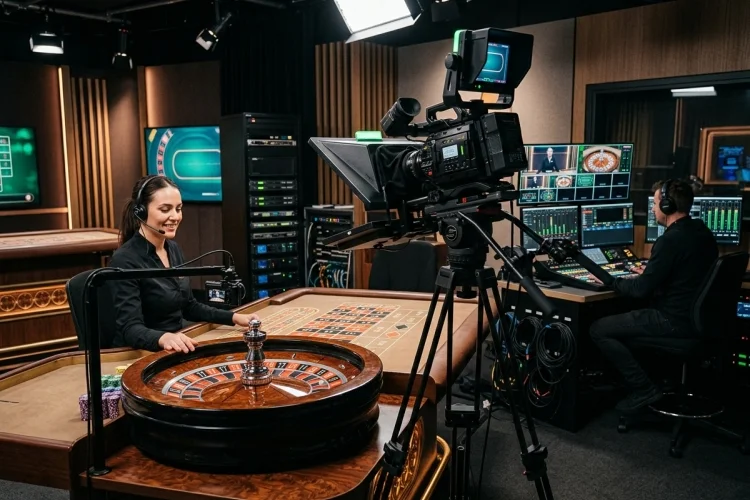
A live roulette table may look simple on your screen, but a lot happens behind the scenes. A dealer manages a real wheel, cameras capture the action, software records each wager, and the platform calculates thousands of individual payouts after the winning number appears.
Live Roulette Games connect these elements in real time, allowing many people to join the same broadcast from different locations. The experience is designed to feel natural, but it also relies on carefully synchronized video and betting systems.
Understanding the technology can help beginners recognize why timers are necessary, how results reach their screens, and what happens when a technical problem interrupts a spin.
The Game Takes Place in a Live Studio
Many live tables operate from dedicated studios built to resemble casino floors. The room contains professional roulette equipment, lighting, cameras, microphones, and workstations for game staff.
A trained dealer welcomes players, opens the betting period, spins the wheel, announces the result, and prepares the next round. Some tables may also be streamed from an actual land-based casino rather than a separate studio.
The dealer controls the physical action, but the online platform manages the individual wagers placed by remote participants.
Multiple Cameras Show the Action
A typical broadcast uses more than one camera angle. A wide shot shows the dealer and table, while a closer view follows the wheel and ball.
The feed may switch automatically as the round progresses. Evolution, for example, describes live roulette tables with multi-camera views that let players follow each spin and the movement of the ball more closely.
These camera changes are not separate spins. They are different views of the same physical round being broadcast to everyone at the table.
The Betting Interface Sits Over the Video
The roulette layout displayed on your device is a digital control panel. You select a chip denomination and tap a number, intersection, column, dozen, color, or another available betting area.
The software keeps track of each chip separately. Although many customers may watch the same dealer, every user can place a different combination of wagers.
Features may include undo, double, repeat, favorite bets, statistics, and a record of previous rounds. Pragmatic Play also describes its live interface as offering quick betting, detailed statistics, and betting history.
Why the Betting Countdown Is Necessary
The dealer and software must close wagers before the result becomes known. A visible timer gives participants a clear betting window and helps synchronize actions across different devices.
When time expires, the interface stops accepting chips. The dealer then calls “no more bets,” and the ball continues toward its final pocket. Standard regulated rules similarly require wagers to close before the outcome is determined.
Internet delay can make last-second betting risky. Placing a wager early gives the server more time to confirm it.
How the Winning Number Is Recorded
Once the ball settles, the winning pocket must be communicated to the game platform. The exact detection process can vary between products, but the result is verified and then displayed across the interface.
The selected number is highlighted on the digital layout, and the system settles every wager automatically. You do not need to claim winnings or calculate complicated combinations yourself.
The betting history should then show the stake, result, and payout. This record can be useful when reviewing a disputed or interrupted round.
What Happens During Technical Problems?
A live stream may occasionally freeze, lose sound, or experience a connection issue. A video delay does not always mean the physical round has stopped, because the game may continue in the studio.
The official rules should explain how interrupted, incomplete, or invalid spins are handled. Depending on the problem, the result may remain valid, or the round may be canceled and affected stakes returned.
Do not repeatedly place chips when the interface appears frozen. Check whether the wager has already been accepted, then use the transaction history or customer support if the balance looks incorrect.
Different Live Formats Use Different Technology
Classic live roulette uses one dealer and one wheel. Speed versions reduce the time between spins, while Auto Roulette replaces the dealer with an automated physical wheel.
Evolution states that its Auto Roulette equipment can produce approximately 60 to 80 rounds per hour. Its Speed Roulette product was designed with rounds lasting around 25 seconds from one spin to the next.
Instant Roulette uses several synchronized wheels that spin continuously, letting players reach a result more quickly. These formats change the pace, but the basic goal remains predicting where a physical ball will land.
Live Roulette Games combine physical casino equipment with video broadcasting, interactive betting software, and automated settlement tools. The dealer manages the wheel, cameras show the action, and the platform records every chip placed through the interface.
Before betting, test the stream, learn where the timer and history tools are located, and read the interruption rules. Avoid last-second clicks, especially on a slow connection or speed table.
Start with a comfortable game pace and small stakes while learning the controls. When the technology is understood, the experience becomes much easier to follow and enjoy responsibly.